10 Easy Christmas Bible Verses Every Child Should Memorize
11/21/2025
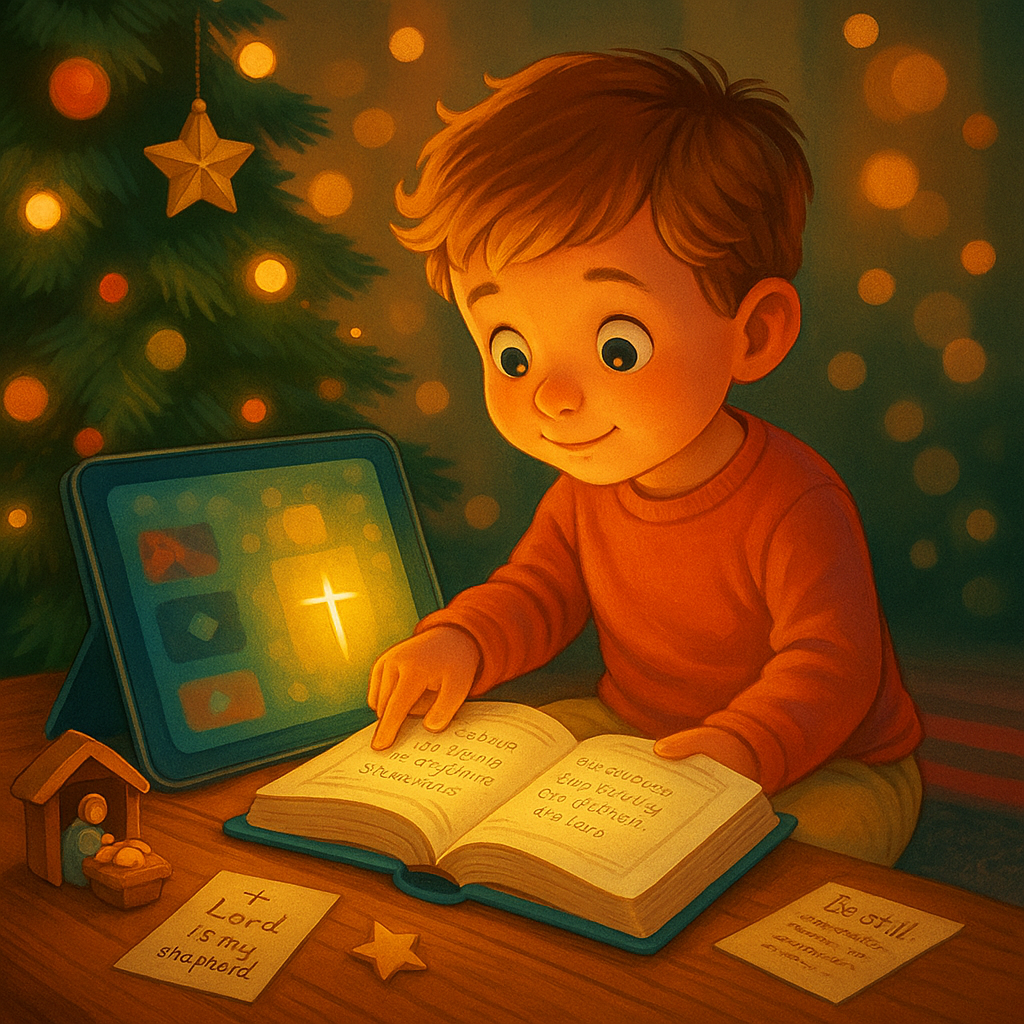
The Christmas story lives in Scripture, but getting kids to remember it past January takes more than reading Luke 2 once on Christmas Eve. Short Bible verses stick in young minds far better than lengthy passages, planting seeds of truth that grow for decades.
This guide walks you through ten easy-to-memorize Christmas verses, explains how to choose age-appropriate scriptures, and offers creative ways to practice them through games, crafts, and family traditions that keep Jesus at the center of your celebration.
Why Short Christmas Bible Verses Help Kids Remember Jesus
Short Christmas Bible verses like Luke 2:10-11 work because they capture the heart of the gospel in language a child can actually remember. "Do not be afraid. I bring you good news that will cause great joy for all the people. Today in the town of David a Savior has been born to you; he is the Messiah, the Lord." That's the angel's announcement in words that stick. Isaiah 9:6 predicts the child who would be born, and John 3:16 explains why God sent Him—"For God so loved the world that he gave his one and only Son, that whoever believes in him shall not perish but have eternal life."
The beauty of brief verses is that they plant God's Word deep in a child's heart where it grows for decades. A five-year-old who memorizes Luke 2:11 carries that truth into adulthood, where it becomes a source of comfort during hard times and wisdom when making decisions. During December when schedules overflow with parties and shopping trips, short verses keep the focus on Jesus rather than the wrapping paper.
Scripture memorization offers three main advantages during the Christmas season:
1. Memory retention: Verses under twenty words stick far better in young minds still learning to retain information
2. Spiritual formation: God's Word shapes character over time as children recall His promises during everyday moments
3. Holiday clarity: Keeps Jesus central when everything else competes for attention
Think of memorized verses as seeds. When planted early and watered through repetition, they take root and bear fruit year after year.
How To Choose Kid-Friendly Christmas Scriptures
Selecting the right verses for children means balancing theological depth with age-appropriate language. Not every passage about Christ's birth works equally well for a preschooler versus a fifth grader, and that's perfectly fine.
Keep It Under Twenty Words
Brevity matters tremendously when teaching children scripture. A fifteen-word verse has a far better chance of being memorized than a forty-word passage, especially for children under eight. Short attention spans and developing memory capacity mean that less truly is more when introducing kids to God's Word.
Luke 2:11 delivers the core Christmas message in just sixteen words: "Today in the town of David a Savior has been born to you; he is the Messiah, the Lord." Compare that to reading the entire nativity narrative, which while important, can overwhelm a child trying to commit words to memory.
Focus On Key Christmas Themes
The Christmas story contains several powerful themes that resonate with children when presented clearly. Rather than trying to cover every aspect of Christ's birth, concentrate on verses that highlight the most important truths. God's gift of Jesus connects naturally to children's understanding of presents. The angels' announcement of good news and great joy speaks to emotions kids already experience. The shepherds and wise men model worship and celebration as the proper response to meeting Jesus.
Children grasp concrete concepts far more easily than abstract theology. When a child learns that God "gave his one and only Son" in John 3:16, they can relate immediately because they understand what it means to give something precious to someone you love.
Match The Verse To The Child's Age
A three-year-old and a ten-year-old have vastly different comprehension abilities, and the verses you choose for each one reflect that reality. Younger children do well with concrete images like "a baby wrapped in cloths and lying in a manger," while older kids can handle more abstract concepts like "the Word became flesh and made his dwelling among us."
Consider reading level, vocabulary, and theological complexity when selecting verses. Preschoolers might start with Luke 2:7's simple description of Jesus being placed in a manger, while elementary students can tackle Isaiah 9:6's rich titles for the Messiah. The New International Reader's Version or New Living Translation often use simpler language than older translations like the King James Version.
10 Easy Christmas Bible Verses Every Child Can Memorize
The following ten verses capture different aspects of the Christmas story in language children can understand and remember. Each one focuses on a specific truth, from prophecy to fulfillment to our response.
1. Isaiah 9:6 For To Us A Child Is Born
"For to us a child is born, to us a son is given, and the government will be on his shoulders. And he will be called Wonderful Counselor, Mighty God, Everlasting Father, Prince of Peace."
This prophecy, written hundreds of years before Jesus arrived, tells us that God promised to send a special child who would rule with perfect wisdom and peace. Children can learn that Jesus wasn't an accident or surprise—God planned His coming long before that first Christmas night. The four titles at the end give kids powerful names to call Jesus when they pray.
2. Luke 2:11 Today A Savior Has Been Born
"Today in the town of David a Savior has been born to you; he is the Messiah, the Lord."
The angel spoke these words to shepherds watching their flocks at night. This verse captures the entire Christmas message in one sentence—a Savior arrived, and He came for you. Children learn that Jesus didn't come just for adults or just for people who lived two thousand years ago, but for them personally.
3. Matthew 1:21 You Are To Give Him The Name Jesus
"She will give birth to a son, and you are to give him the name Jesus, because he will save his people from their sins."
The angel told Joseph exactly what to name Mary's baby and explained why. Jesus means "the Lord saves," and that's precisely what He came to do—save us from our sins. This verse connects Christ's name directly to His mission, helping children understand that Jesus isn't just a nice historical figure but their personal Savior.
4. Matthew 2:10 They Were Overjoyed
"When they saw the star, they were overjoyed."
This short verse captures the wise men's reaction when they finally found Jesus after their long journey. True joy comes from finding Jesus, not from getting presents or eating cookies. Children can relate to the excitement of finally reaching a destination after a long trip, and this verse teaches them that meeting Jesus is worth any journey.
5. Luke 2:7 She Placed Him In A Manger
"And she gave birth to her firstborn, a son. She wrapped him in cloths and placed him in a manger, because there was no guest room available for them."
The humble circumstances of Jesus' birth teach children that God doesn't need fancy surroundings to do amazing things. A manger—a feeding trough for animals—became the first bed for the King of the Universe. This verse paints a vivid picture that even young children can visualize and remember.
6. Luke 2:10 I Bring You Good News Of Great Joy
"But the angel said to them, 'Do not be afraid. I bring you good news that will cause great joy for all the people.'"
The shepherds were terrified when angels suddenly appeared in the night sky, but the angel's first words were "Do not be afraid." The Christmas message is good news that brings joy, not fear. Children learn that God's messengers come to help us, not scare us, and that the birth of Jesus is cause for celebration.
7. Luke 2:14 Glory To God In The Highest
"Glory to God in the highest heaven, and on earth peace to those on whom his favor rests."
After the angel made the announcement, a whole army of angels appeared, praising God with these words. This verse became one of the most famous songs in history, reminding us that Christmas is ultimately about giving glory to God. Children can learn this as a simple praise statement to use year-round, not just in December.
8. John 1:14 The Word Became Flesh
"The Word became flesh and made his dwelling among us. We have seen his glory, the glory of the one and only Son, who came from the Father, full of grace and truth."
This verse explains the miracle of the incarnation—God becoming human. Jesus wasn't just a good teacher or prophet; He was God Himself choosing to live among us. While the concept is deep, children can grasp that Jesus is both fully God and fully human, making Him able to understand everything we go through.
9. John 3:16 God So Loved The World
"For God so loved the world that he gave his one and only Son, that whoever believes in him shall not perish but have eternal life."
Perhaps the most famous verse in the Bible connects directly to Christmas. God's love motivated Him to give us Jesus, making Christmas the ultimate expression of divine love. Children learn that believing in Jesus—trusting Him as Savior—is how we receive eternal life, the greatest gift anyone could ever receive.
10. Micah 5:2 Out Of Bethlehem Will Come A Ruler
"But you, Bethlehem Ephrathah, though you are small among the clans of Judah, out of you will come for me one who will be ruler over Israel."
Another prophecy that came true when Mary and Joseph traveled to Bethlehem for the census. This verse reminds children that God often chooses small, unexpected places and people to do big things. Bethlehem was a tiny town, yet it became the birthplace of the King of Kings.
Fun Ways To Practice The Verses At Home And Church
Memorization doesn't have to feel like homework. When families and churches make scripture memory interactive and enjoyable, children engage more deeply and retain verses longer. The key is repetition through variety—saying the same verse in different ways keeps it fresh without becoming tedious.
Verse Motions And Actions
Adding physical movements to verses helps children remember them because they're engaging multiple senses at once. When kids connect words with actions, the verse sticks in their memory far better than words alone. Create simple, repeatable motions that correspond to key words or phrases.
Try action ideas like rocking arms for "child is born," jumping with raised arms for "great joy," or pointing upward for "glory to God." Sunday school teachers and parents can lead children through motions several times, gradually speeding up or adding fun challenges like doing them in silence or with eyes closed.
Memory Card Games
Turn scripture memorization into playtime with simple card games. Write each word of a verse on separate cards, then have children race to put them in order. Competition and play naturally motivate kids to practice without realizing they're learning.
Another option involves creating matching pairs—one card with the reference and another with the verse text. Children play memory-style games, flipping cards to find matches. Fill-in-the-blank cards work well for older children who already know the verses partially; leave out key words and have them supply the missing pieces.
TruPlay App Scripture Quizzes
Digital games offer another avenue for scripture reinforcement, especially for tech-savvy kids who enjoy screen time. Interactive quizzes and challenges through faith-based apps make memorization feel more like entertainment than education. When children answer questions correctly and earn rewards, they're motivated to keep practicing verses they might otherwise find boring.
Ideas For Cards Crafts And Advent Calendars
Incorporating Christmas Bible verses into holiday traditions and decorations keeps scripture visible throughout the season. When verses appear on cards, crafts, and calendars, children encounter God's Word repeatedly in natural, non-pressured ways.
Write A Verse Inside Christmas Cards
Adding a personal scripture verse to greeting cards transforms them from simple holiday wishes into spiritual encouragement. Children can practice their handwriting and memorization simultaneously by copying verses into cards for grandparents, teachers, or neighbors.
Choose shorter verses like Matthew 2:10 or Luke 2:14 that fit easily in card spaces. Older children might illustrate the verse with drawings of stars, mangers, or angels, making each card a unique gift that shares God's Word naturally.
Build A Ten-Day Countdown Chain
Paper chains offer a tactile way to count down to Christmas while learning scripture. Create ten links, each featuring one of the verses from this article. Each day, children tear off one link, read the verse aloud, and try to recite it from memory. By Christmas Day, they've reviewed all ten verses multiple times without any formal drilling.
Use colorful paper and let children decorate each link with stickers or drawings. Hang the chain somewhere prominent—over a doorway or across a mantel—so the family sees it daily and remembers to practice.
Display Verses On Ornament Crafts
Handmade ornaments become treasured keepsakes when they feature meaningful scripture. Decorations serve double duty, beautifying the tree while keeping God's Word visible throughout December and beyond. Children take pride in ornaments they've created themselves, and they're more likely to read and remember verses displayed on their own handiwork.
Consider craft options like writing verses on colorful cardstock cut into stars or angels, displaying verses alongside nativity scenes in small photo frames, or stringing verse cards together as garland across mantels. Salt dough ornaments allow children to press verses into clay before baking for permanent keepsakes.
Next Steps For Faith-Filled Screen Time With TruPlay Games
Scripture memorization builds a foundation, but children also benefit from entertainment that reinforces biblical values throughout the year. Not all screen time has to be spiritually neutral or worse—it can actively support what families teach at home and church. Digital entertainment rooted in Christian principles offers parents a trustworthy option when kids ask for device time.
TruPlay Games creates interactive experiences where children encounter biblical truth through engaging stories and characters. Games that incorporate scripture memory challenges, Bible trivia, and faith-based adventures make spiritual growth feel natural rather than forced. When kids play games where heroes rely on God and villains are clearly evil, they're absorbing important lessons about right and wrong without a lecture.
The Christmas season offers a perfect opportunity to introduce faith-based digital content. After children memorize verses about Jesus' birth, they can explore games and videos that expand on the same themes. Interactive quizzes reinforce what they've learned, while story-driven adventures show them what it looks like to live out faith in everyday situations.
Get started with your free 7-day trial today and turn game time into God time for your family. Download the TruPlay app from the Apple App Store or Google Play to unlock a safe, fun, and faith-filled entertainment experience for your kids.
FAQs About Short Christmas Bible Verses For Kids
Which Bible translation works best for children memorizing christmas verses?
The New International Version and New Living Translation use simpler language that children understand more easily than older translations like the King James Version. The New International Reader's Version specifically targets younger readers with even more accessible vocabulary. However, the best translation is often the one your family already uses regularly, as consistency helps children connect what they're memorizing with what they hear in church and family devotions.
How many christmas bible verses for kids should a preschooler learn at one time?
Start with just one or two verses and add more only after the child has mastered the first ones. Preschoolers have limited working memory and do better with deep familiarity with a few verses than shallow exposure to many. Once a child can recite a verse confidently without prompting, celebrate that achievement before introducing the next one.
What can parents do if their child struggles with scripture memorization?
Break verses into smaller phrases and practice just one section at a time before putting the whole verse together. Use songs or rhymes to make verses more memorable—many Christmas scriptures already have musical settings that children can learn. Practice daily for just a few minutes rather than long sessions, as brief, frequent repetition works better than occasional marathon study times. Most importantly, keep the experience positive and pressure-free so children associate God's Word with joy rather than stress.
Can families share children's christmas scriptures on social media or printable worksheets?
Most Bible verses can be shared freely for personal and ministry use, but commercial use sometimes requires permission depending on the translation. The New International Version allows up to 500 verses to be quoted without permission for non-commercial purposes, while other translations have different guidelines. Always check your specific Bible translation's copyright page or publisher's website for exact policies, especially if you plan to sell products featuring the verses or use them in large-scale distribution.