Parents’ Guide to Disney’s New Snow White: Is It Too Woke?
10/23/2024
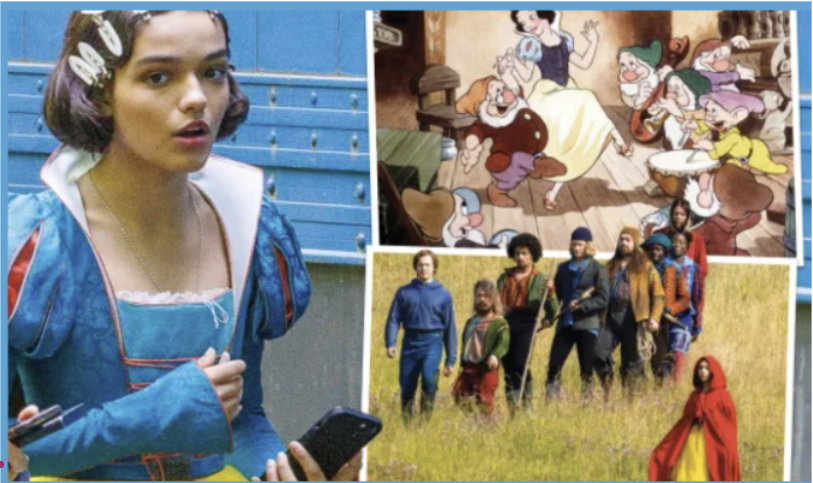
Disney’s remake of Snow White and the Seven Dwarves has caused some controversy well before its March 2025 release. The first controversy centers on the ethnicity of the lead actress, Rachel Zeigler, a young woman of Polish-Colombian descent. Snow White, as her name suggests, is traditionally white and known for her pale skin, a throwback to the beauty standards in 1812 when the Brothers Grimm first published the fairy tale.
The second controversy centers around her coterie of dwarves, which in the first stills made available, showed a diverse group of actors, only one of whom was actually a little person. This caused a reaction within the dwarf community, most notably from Peter Dinklage, who expressed outrage that this rare acting opportunity was denied to actual little people. Disney has since replaced those stills with a trailer which has cgi dwarves, which did little to appease anyone.
The last and most important controversy stems from words spoken by Rachel Zeigler herself, who said of Snow White: “She’s not going to be dreaming about true love. She’s dreaming about becoming the leader she knows she can be, and the leader that her late father told her that she could be if she was fearless, fair, brave and true.” Later she characterized the prince as a stalker who kissed a dead person. The audience should not expect Snow White to be rescued by a prince in this new update.
So how should a Christian navigate these issues? Is the new and supposedly improved Snow White too “woke?” Does the movie reflect a progressive culture that has lost its way, or do these changes merely reflect a reimagining of an old fairy tale that speaks to a culture very different from the original 19th century audience for which it was intended?
The fear surrounding much of the Christian discourse on this topic stems from a growing distrust of Disney, a distrust that is well-earned, I might add. However, without seeing the movie, jumping to conclusions about whether it is undermining family values or Christian teachings seems premature. So taking each of the three controversies at face value, applying some critical thought appears indicated.
The outrage concerning the diversity of the cast, including a Latino actress as Snow White, is incomprehensible to me, personally. I think of the least read section of the Bible, the genealogies in Genesis, and the crucial message it sends about the brotherhood of man. Every one of us was created by God and those genealogies prove that we are all connected to one another and always have been. Fairy tales are not the Bible and so reinventing aspects of them to include the audience shouldn’t be threatening. The Lion King is essentially a retelling of Hamlet. To insist that the original was meant to be human–and therefore all subsequent renderings of the story should only include humans–would be ridiculous on its face.
That is not to say that diversity does not have its challenges for Christian families. These days diversity implies an acceptance of any and all lifestyle choices and belief systems. The real question is whether Snow White will have a darker agenda once it is released. Until then, I don’t think that objecting to anyone’s race is a good look for anyone, particularly Christians. After all, we have the mandate to reach every tribe and every nation. The fact that Snow White isn’t white seems a creative choice rather than a “woke” attack on traditional values.
The next controversy surrounding the little people’s inclusion is harder to comment on. These days, it is difficult to say or do anything without offending one group or another. I sympathize with the dwarf community, but that is my personal take. I think that if one is going to change some of the basic underpinnings of a story, then there ought to be good reason for it. Changing the seven dwarves is a regrettable decision. I would be interested in hearing Disney’s thought process about this. And changing them back to dwarves but only in cgi format does seem a bit tone deaf.
Lastly, the issue of “woke” feminism raises its head in much of the criticism surrounding this movie. As an English professor, I can see both sides of the argument. Fairy tales have long been compared to the relationship between Christ and the church. The bridegroom rescues the bride from death and welcomes her into a loving marriage free from her enemies. He defeats the enemy who often has demonic undertones. I think of the dragon in Sleeping Beauty. Snow White’s persecutor, her wicked stepmother, certainly has a Satanic appearance.
But those metaphors have their limits. In practical life, women generally don’t need to be rescued. A good marriage involves give and take on the parts of both husband and wife. The Christian church itself is split on what a Christian marriage should look like. Some are dogmatic in their view of a submissive wife while others take a more egalitarian approach. The trend towards more empowered females has its benefits and drawbacks. In Brave, the father of the heroine, Merida, backs off of forcing her to marry at the age of fifteen. This seems like a good trend to me. However, in many of the current action movies, a 110-pound heroine is often able to take down several men twice her size. I think this is both unrealistic, and given the current issues our nation has with domestic violence, a dangerous message to send.
However, a female with a voice and a say in her destiny is biblical. Esther rescued a nation with her brave actions. Mary braved the disapproval of her culture and family when she answered God’s call to give birth to Jesus. And, of course, there are more female heroines in the Bible. One might even argue that the Bible, particularly the New Testament, is feminist in the way that it shows how Jesus values women. After all, Mary Magdalene was the first to see Jesus and the first to announce his resurrection. That makes a woman the very first evangelist.
More insidious than outspoken and proactive heroines is Disney’s fascination with villains. Their new Villain’s Land at the Magic Kingdom suggests a tendency towards a fascination with evil. A disturbing trend is the creation of a sympathetic villain who is merely a victim of their circumstances. It remains to be seen whether Snow White will follow this trend, but if Cruella is any indication, it is possible that Greta Gerwig’s take on the Evil Queen may glamorize evil. Certainly the Evil Queen’s narcissistic obsession with external beauty could create a nice moral juxtaposition against Snow White’s beautiful character. We might hope that Disney will make the case against evil in Snow White, though (again) it will be hard to judge before the movie comes out.
This fascination with evil is the real danger of which Christian parents should be aware. The Evil Queen was a representation of evil itself in the original fairy tale. She seeks to destroy a young life out of greed and jealousy. The Bible has such characters, too: Haman, who wanted to eradicate the Israelites, and Herod, who ordered the slaying of all Jewish babies in fear of a messiah being born. Pharaoh, too, hardened his heart repeatedly against the suffering Hebrews. Christians believe in a real evil and that the fight against that evil is something everyone will have to face one way or another. Hopefully, this movie will steer clear of muddying the nature of evil, a tendency in entertainment that has disastrous consequences in our culture.
Before taking children to this movie, a preview or perhaps a couple of in depth reviews are advisable. After all, a trailer doesn’t show enough to make an informed decision. However, Disney is increasingly showing itself to be morally untrustworthy. Their series, Pauline, about a girl who is impregnated by and falls in love with the devil, is wicked fare. Boycotting all of Disney because of this messaging is a valid choice, in all honesty.
Finding quality entertainment that aligns with Christian values and avoids the “woke” agenda so prevalent is quite a challenge. I am greatly encouraged by Angel Studios which has put out some very good content. One way to navigate this minefield is to take advantage of the incredible library that is available to the modern viewer. For example, my daughters loved LIttle House on the Prairie and the original Anne of Green Gables. But the biggest weapon parents have is teaching their children to discern for themselves the value or lack thereof in whatever shows they watch. This is labor intensive, but a parent who watches the shows and is able to engage a child in a discussion about it teaches a life skill called critical thinking. Even an occasional misstep in viewing content can be redeemed by a conversation.
I am privileged to write content that models a life of faith. As a writer for TruPlay Games, my goal isn’t to preach but to draw children in to the wonders of a life lived in relationship to God. In the RhymVerse, our villains are evil, but our RhymSquad has God on their side. What wicked villain can stand against them? Check us out at https://www.truplaygames.com/ . We have characters at all stages of a spiritual walk. And best of all, our messages are biblical, inspiring, and life-giving.