Can AI help your kids with homework? Should it?
2/21/2025
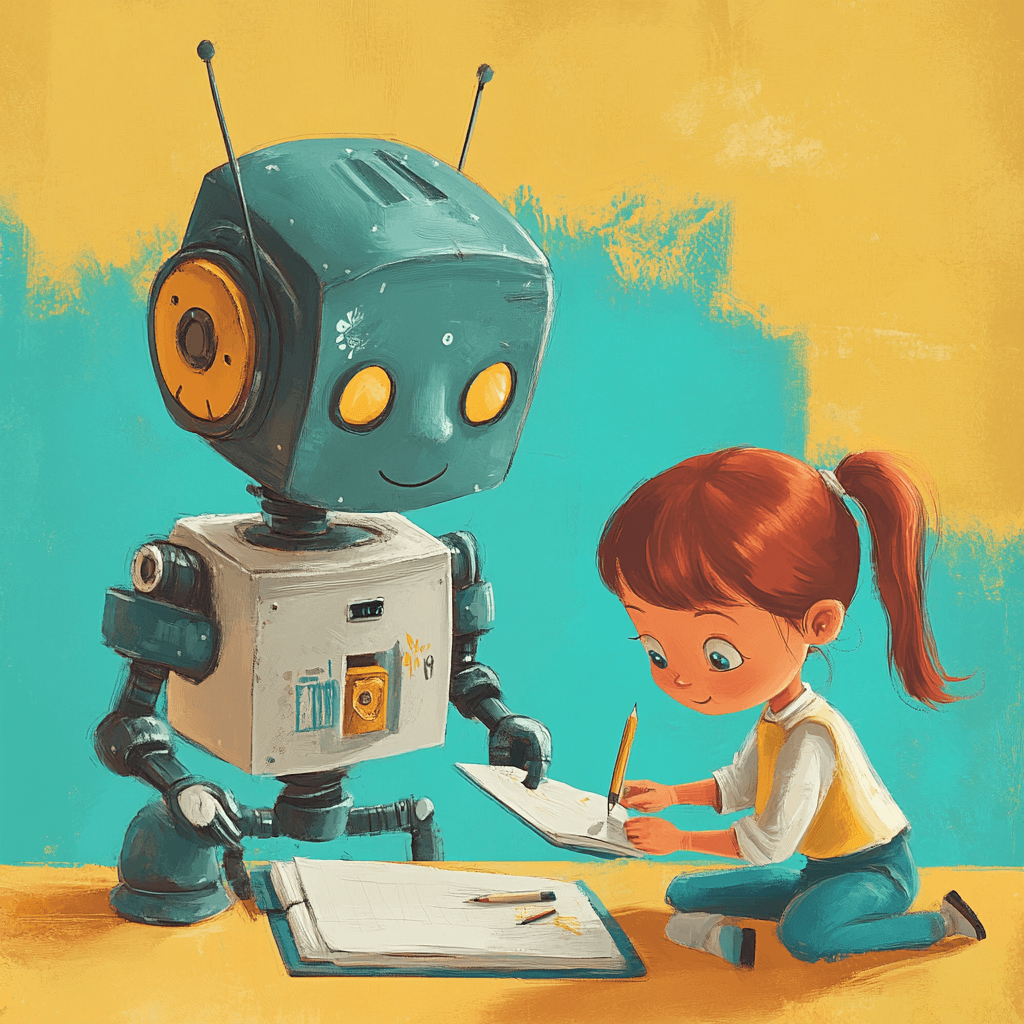
Parents face many challenges, but with the rise of AI (Artificial Intelligence) and related technologies such as ChatGPT, Copilot (a Microsoft product), and Gemini (a Google product, many parents may feel ill-equipped to navigate today’s world, especially when it comes to their children (who likely know more than they do about such technology). If you have school age children, chances are they’re using AI. The question is, should they? And what, if anything, can parents, teachers, homeschoolers, and others do about it?
What is AI?
First things first, since many parents are behind their children in technological knowledge. AI is an acronym for Artificial Intelligence, which is commonly used to encompass a broad category of technology designed to mimic human intelligence, learning from data, solving problems, and performing tasks without explicit programming. AI systems can compose music, generate art, and write articles, all of which are powered by sophisticated algorithms trained on vast amounts of data. These tools analyze vast amounts of data to make predictive decisions and generate content with the press of a key.
In a recent report, Teen and Young Adult Perspectives on Generative AI, released by Harvard's Center for Digital Thriving in partnership with Common Sense Media and Hopelab, just over half (51%) of respondents ages 14-22 said they've used AI at some point, though only 4% said they've used it daily and 8% answered that they didn't know what AI tools are.
How Are Students Using AI?
According to the report, many teens say they and their peers are using AI for fun, entertainment, and “to be creative.” They say they’re writing song lyrics, digital art, music, and videos. Many—46%—said they've used AI to help with schoolwork. But some respondents also raised alarms, saying they or their peers have used it to cheat “on everything from writing term papers to figuring out answers to really hard assignments. We even have it write our book reports.” They also report matter-of-factly that kids also use AI to create sexually explicit content.
The availability of AI to tech-savvy students and the ability to quickly generate content that fulfills an assignment with little effort can be irresistible to students under pressure to meet deadlines or manage heavy workloads. And the lines between legitimate and illegitimate uses of AI can be hard for adults to distinguish, let alone their children. Obviously, simply copying and submitting work that isn’t one’s own is cheating. To today’s kids, finding answers to, say, complex math problems can seem no different than using a calculator. And some schools and teachers are learning ways to detect AI-generated content in their students’ work. Further confusing things, there are many legitimate uses for AI technology (for example, in the above study, 51% of respondents say they’ve used AI for brainstorming, and 53% say it’s been helpful for research purposes; AI can also be used, like auto-correct on smartphones and computers—which is a form of AI—to proofread and check one’s work).
What Should Parents Do?
Like it or not, AI is here to stay. In fact, you’re already using it, whether you ask Siri or Alexa for information or take recommendations from streaming services such as Netflix and Spotify recommend shows, movies, or music based on what you’ve watched or listened to. But you can take a few helpful steps to address AI-related schoolwork issues.
1. Talk to your kids about AI. Start by asking them if and how they’ve found services like ChatGPT helpful. Ask them to show you how to use it.
2. Share with your kids the drawbacks of AI. Help them understand the difference between “research” and cheating. Help them understand that, while shortcuts can be helpful, they can also short-circuit the goals of education: thinking critically, gaining knowledge, and developing skills. You might also be able to demonstrate (for example, by querying AI on a subject you or your child know very well—such as a Bible story—or asking it to write your own short biography) that AI sometimes returns inaccurate information.
3. Set boundaries for AI use. Help your children define what’s acceptable and what’s not. For example, you might show them how to outline a report and research a subject and then use that information to write their own content. Teach them to cross-check their research and carefully cite their sources rather than blindly trusting AI responses.
4. Monitor your kids’ homework. Everyone is busy these days, and you don’t need to hover over your child as he or she does homework, but keeping tabs on their process and checking their work can be helpful. Ask them how they came up with answers, and what tools they used. If their work product seems uncharacteristic of their usual output, it might indicate that they’ve used AI...inappropriately.
5. Have fun together. Learning the limits and uses of AI can be a project for parents and children to do together. Experiment with writing prompts. Create a fun meme graphic together. Get instructions on how to do a family project. The more familiar you become with AI, the more you’ll be able to guide your children.
Like any tool. AI can be used...and misused. As a new development in education, it has both great possibilities and grave dangers. But parents who take active roles can help their children navigate not only today’s tech landscape...but also tomorrow’s challenges.